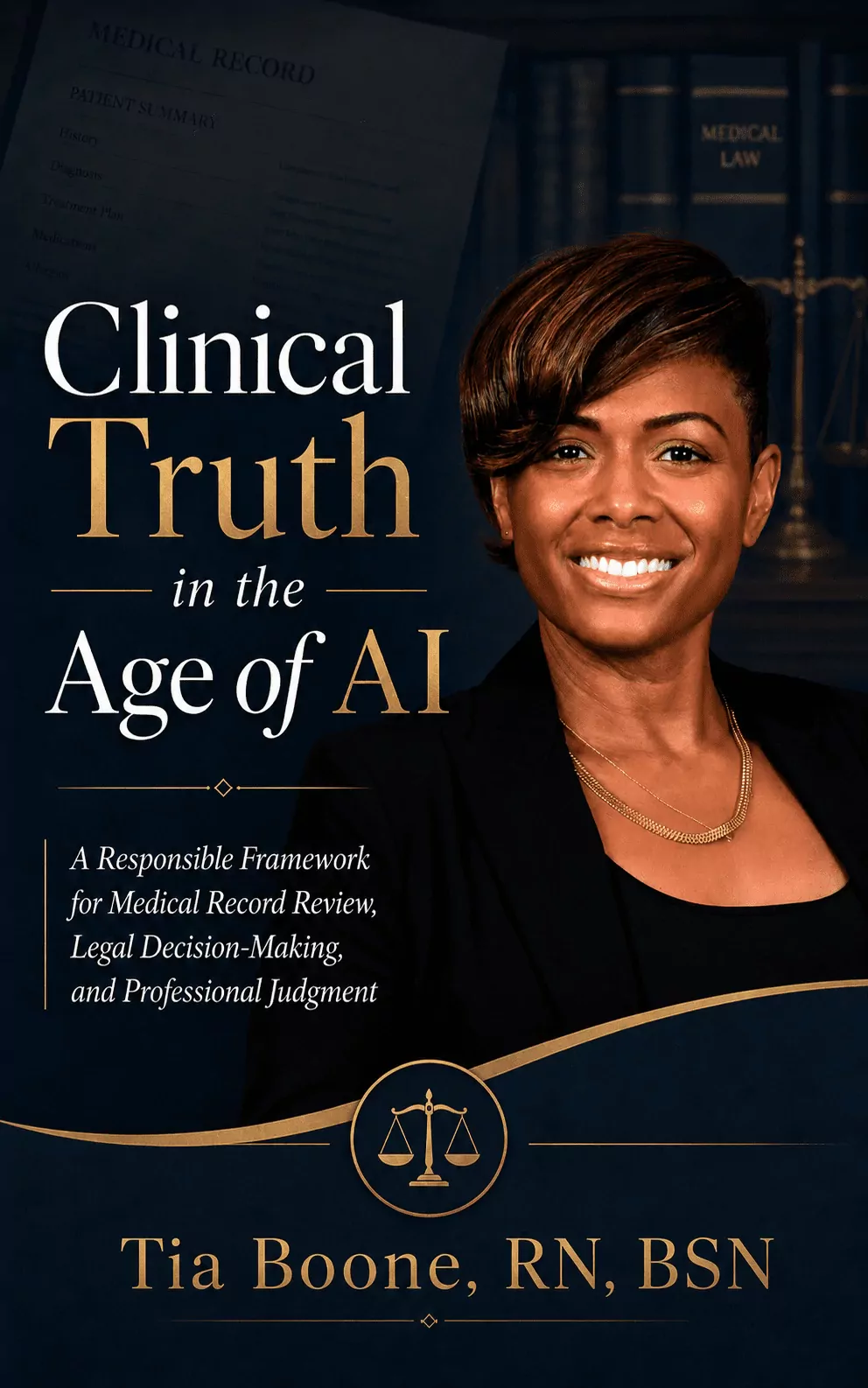
Clinical Truth in the Age of AI

Image

The Future of Medical-Record Review Isn’t Human vs. AI. It’s Knowing Which One Should Be in Charge.

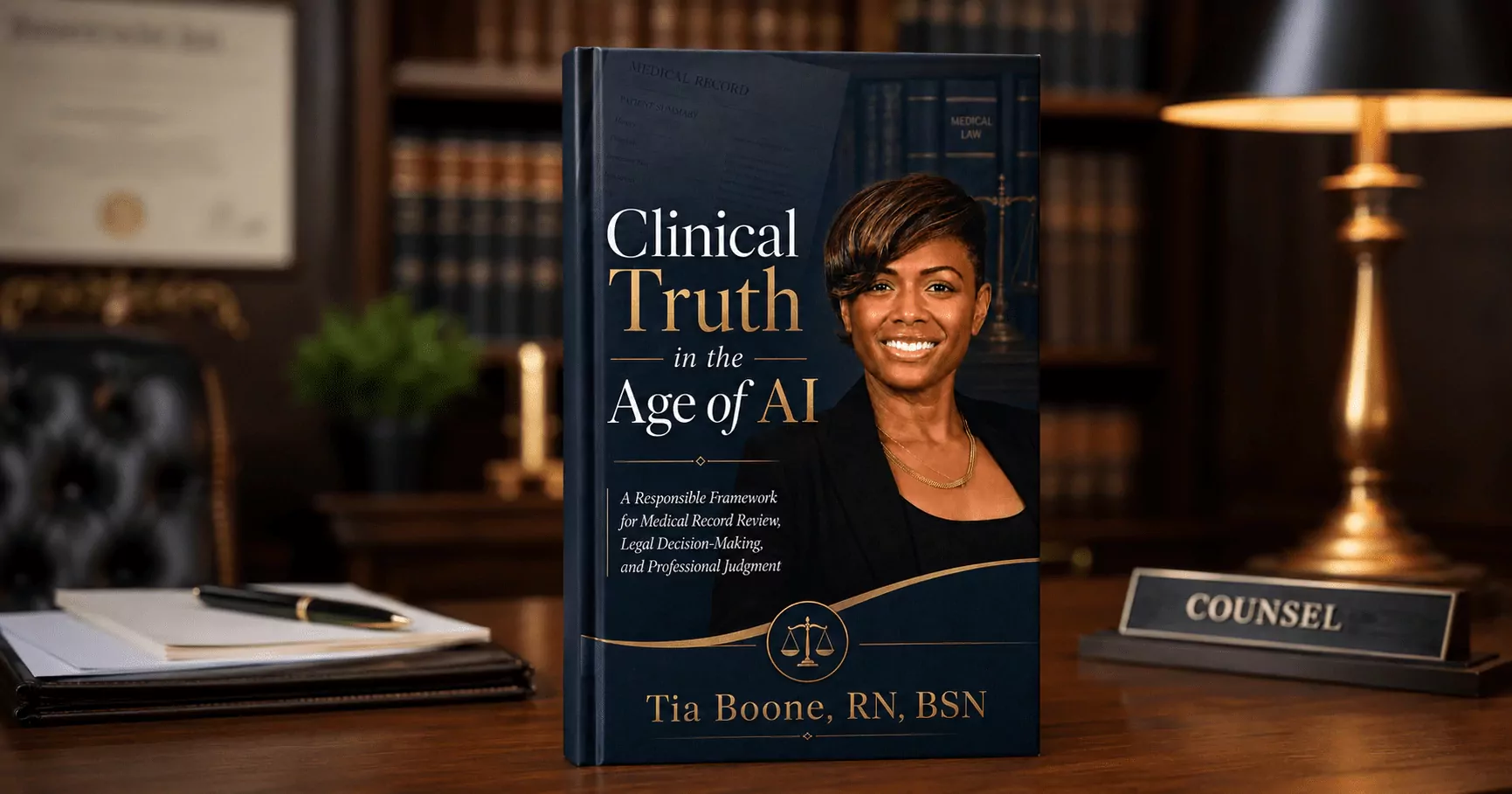
Clinical Truth in the Age of AI

A Responsible Framework for Medical-Record Review, Legal Decision-Making, and Professional Judgment

What You'll Learn Inside This Book

Why you should never confuse a polished AI answer with a verified answer.

You’ll see how an AI system can confidently overlook information that is sitting inside the medical record—and why clinical expectations, source-level verification, and professional curiosity remain essential safeguards when technology gets something wrong.

How to read the medical record as evidence instead of treating every entry as unquestionable truth.

You’ll learn how documentation errors, copied information, conflicting dates, missing records, questionable medications, incorrect demographics, and other inconsistencies can distort the clinical story if they are accepted at face value.

How to begin a medical-record review with the right question.

Instead of becoming buried in hundreds or thousands of pages, you’ll learn how to define the clinical issue you are actually trying to resolve, identify what evidence matters, recognize what is missing, and keep the review focused on the decision that needs to be made.

How to reconstruct a case chronologically so the medical story becomes easier to understand and defend.

You’ll learn why chronology is more than a list of dates and how the timing of symptoms, diagnostic findings, treatment, gaps in care, preexisting conditions, and outcomes can strengthen—or challenge—the story being presented.

How to separate fact, opinion, assumption, patient report, and documentation error.

You’ll discover why those categories should never be treated as interchangeable and how phrases such as “possible,” “suggests,” “may represent,” and “confirmed” can dramatically change the weight a piece of medical information should carry.

How to test whether the entire clinical picture actually makes sense.

You’ll learn to compare diagnoses against symptoms, laboratory values, imaging, medications, examination findings, treatment decisions, response to care, and outcomes instead of relying on a single impressive-looking entry to provide the answer.

How to analyze causation without forcing the record to support the outcome one side wants.

You’ll explore the relationship between mechanism of injury, timing, preexisting conditions, objective findings, treatment, and outcome so you can distinguish a clinically supportable relationship from a narrative built primarily on assumption or sequence alone.

How to move from an answer that sounds plausible to a conclusion that is clinically defensible.

You’ll learn how to make important findings traceable to their sources, acknowledge competing explanations, verify outside literature, stay within the limits of your expertise, recognize when another specialist is needed, and communicate uncertainty without weakening your credibility.

How to build AI into your professional workflow without turning it into the final authority.

You’ll learn where AI can appropriately assist with tasks such as organizing information, developing chronologies, identifying providers, locating evidence, generating questions, and supporting preliminary research—and where direct professional judgment must remain in control.

How to protect your credibility, your clients, and the people behind the records as AI becomes more powerful.

You’ll examine privacy, authorization, bias, confidentiality, source verification, cognitive laziness, professional accountability, and the importance of remaining adaptable as AI continues changing healthcare, legal, insurance, and consulting work.

Who this Book is For

Image

Clinical Truth in the Age of AI was written for legal nurse consultants, personal injury attorneys, medical malpractice attorneys, insurance professionals, clinicians involved in medical-legal analysis, and other professionals whose decisions depend on understanding medical information accurately.


It is especially relevant if you are already experimenting with AI, wondering how far you can safely rely on it, or concerned that avoiding it completely could eventually leave you behind. Whether you are reviewing complicated medical records, evaluating causation, preparing a chronology, assessing clinical evidence, researching an unfamiliar issue, or trying to make sense of conflicting documentation, this book will help you develop a more disciplined way to combine technology with human judgment. 


It is not designed to teach you to hand your professional work over to a machine. It is designed to help you become the kind of professional who knows how to use the machine without surrendering the experience, curiosity, context, verification, and accountability that make your work trustworthy.

About the Author

Img Feature

Tia D. Boone

Tia D. Boone, R.N., BSN, is a seasoned registered nurse, legal nurse consultant, and founder of Nurse Review Pro. With 27 years of nursing experience and more than a decade helping attorneys and insurers interpret complex medical evidence, Tia specializes in turning dense medical records into clear, clinically grounded insights. Her work combines critical thinking, clinical experience, and a commitment to uncovering the truth behind the documentation. In *Clinical Truth in the Age of AI*, Tia brings that same perspective to one of today’s biggest professional challenges: using artificial intelligence without sacrificing human judgment, accuracy, or accountability.

Frequently Asked Questions

Is this book only for legal nurse consultants?

No. Legal nurse consultants are an important audience for the book because they regularly work at the intersection of clinical information and legal decision-making, but the framework is intentionally broader. Personal injury attorneys, medical malpractice attorneys, insurance professionals, healthcare professionals, consultants, and others who must evaluate medical information can apply many of the principles.

The common thread is responsibility. If medical documentation influences a conclusion, claim, case strategy, report, recommendation, or professional decision you make, the ability to separate evidence from assumption and AI assistance from professional judgment matters.
Do I need to already use artificial intelligence to benefit from this book?

No. The book is relevant whether you use AI every day, have experimented with it a few times, or are still deciding whether it belongs in your workflow.

Rather than teaching one specific platform that may become outdated, the book focuses on longer-lasting principles: defining the question, examining the record critically, creating a chronology, testing the clinical picture, verifying sources, recognizing uncertainty, protecting private information, and deciding which responsibilities should remain with the human professional.

Does the book recommend letting AI analyze medical records for me?

The book takes a more disciplined position. AI can be extremely useful for tasks such as organizing large amounts of information, identifying dates and providers, assisting with chronologies, locating references, generating secondary questions, and supporting preliminary research.

But those efficiencies should not be confused with authority. The professional remains responsible for verifying important facts, interpreting their clinical significance, challenging information that does not make sense, staying within appropriate professional boundaries, and owning the final work.

Will this teach me which AI software I should use?

This is not a directory of the latest AI platforms or a step-by-step manual for one particular piece of software. AI technology changes too rapidly for a book built around individual product features to remain useful for very long.

Instead, Clinical Truth in the Age of AI gives you a framework for evaluating where an AI tool belongs in your process. That allows the principles to remain useful even as individual platforms improve, disappear, or are replaced.

What makes this different from a general book about AI?

This book begins with the realities of medical records and professional decision-making rather than with the technology itself. The focus is not simply on what artificial intelligence can do. The focus is on what happens when AI interacts with incomplete documentation, conflicting medical evidence, causation questions, confidential patient information, clinical uncertainty, and decisions that affect real people.

That difference matters because speed is only valuable when the information being produced remains accurate, supportable, responsible, and appropriate for the professional using it.

Does this book teach medical causation?

The book provides a framework for thinking more carefully about causation in medical-legal work. It examines the relationships among the mechanism of an event, the patient’s baseline condition, timing, symptoms, objective findings, treatment, preexisting conditions, competing explanations, and outcome.

It does not suggest that every reader should offer opinions outside their professional scope or expertise. In fact, one of its central principles is knowing when the evidence or clinical issue requires another physician, specialist, or appropriately qualified professional.

Can this help me review large medical records more efficiently?

Yes—but the goal is not simply to read faster. The book shows why defining the question first can prevent a large medical record from controlling the review and why a focused chronology can transform scattered documents into a sequence that reveals clinically meaningful relationships.

It also explains where AI may reduce repetitive organizational work while emphasizing that summaries and chronologies still have to be verified against the primary source. Efficiency should give the professional more room to think, not an excuse to think less.

What if an AI answer sounds completely convincing?

That is precisely one of the problems this book addresses. AI can produce language that is clear, confident, polished, and wrong at the same time. It can also provide an answer that is technically accurate while silently omitting an important fact.

You’ll learn why confidence is not evidence, why important conclusions should be traceable to the primary record, and why statements that information is “not documented” deserve particular scrutiny. A professional should be able to explain not only what the answer is, but where it came from and why the evidence supports it.

Does the book address privacy and confidentiality when using AI?

Yes. Responsible AI use is about more than whether the output is correct. Medical records may contain extraordinarily sensitive personal information, and professionals have to consider authorization, confidentiality, organizational policies, data handling, appropriate systems, and how much information should be provided to a tool in the first place.

The book reinforces a simple but important principle: convenience does not create permission. Protecting the person behind the record includes protecting that person’s information.

What is the biggest idea I should expect to take away from this book?

Technology can strengthen professional judgment, but it cannot assume professional responsibility.

AI may help you process more information, organize complicated records, work faster, research questions, and notice possibilities you might otherwise overlook. But it cannot put its license, reputation, relationship, or professional credibility behind the final conclusion. That responsibility remains with the human being using the tool. The goal of this book is to help you become faster without becoming less careful, less curious, or less trustworthy.

Our Guarantee

The Clinical Clarity Promise

This book is complimentary, so there’s nothing to buy and no financial risk involved.


My promise is simpler: you will leave this book with a clearer, more responsible framework for reviewing medical records and using AI in professional decision-making.


You’ll learn practical ways to question AI output, verify important findings, recognize gaps and inconsistencies in medical documentation, evaluate evidence more critically, and keep human judgment at the center of your work.


You may not agree with every conclusion or apply every principle in exactly the same way. But if this book causes you to slow down at the right moment, ask a better question, catch something an automated tool overlooked, or make one more defensible professional decision, it has done its job.


No hype. No promise that AI will replace your expertise. Just a practical framework designed to help you use technology without surrendering the judgment your clients depend on.

Ready to Get Started?

Get Instant Access to Clinical Truth in the Age of AI

© 2026 All Rights Reserved, TD Consulting & Advisory, LLC